The Selves Inside the Books
I’ve been thinking about comfort reads.
Not necessarily comforting books.
That feels like an important distinction.
Some of the books I return to contain murder, grief, ghosts, trauma, badly behaved historians and at least one deeply questionable relationship with time.
They are not soft books.
They are not always kind books.
Some of them contain worlds I would absolutely not choose to live in.
And yet I return to them.
Not because they make everything feel safe, exactly.
Because they make something feel familiar.
A voice.
A place.
A way of seeing the world.
A version of myself.
Sometimes I think the comfort is not in the story at all.
It is in the recognition.
There are books that meet you at a particular point in your life and somehow get tangled up with the person you were then.
Years later, when you pick them up again, you are not only rereading the book.
You are rereading yourself.
The Ice House
I first read Minette Walters’ The Ice House in the early 1990s.
By 1993, I had had my first daughter and was back at work after maternity leave.
This was back in the days when you got three months maternity leave from the day you stopped work, and then apparently reappeared in the office as though producing an entire human being had been a minor scheduling issue.
I had changed enormously.
The world around me had not.
When I first read The Ice House, much of its social world felt completely recognisable.
The language.
The assumptions.
The lunchtime drinking.
The anytime drinking.
The attitudes towards sexuality.
The way people spoke to each other.
The things that were tolerated.
The things that were not.
I was married at the time, in a horribly unstable heterosexual relationship, while also being a bisexual woman.
I had grown up in a very liberal and open environment, so not all of those attitudes belonged to me.
But I knew them.
I recognised the world that produced them.
When I reread The Ice House more than twenty-five years later, it felt almost like opening a time capsule.
Some of the attitudes were startlingly out of step with where we are now.
Not because society has somehow become enlightened and perfect.
Obviously not.
But the boundaries have shifted.
The language has shifted.
The things people challenge have shifted.
What once felt contemporary now felt historical.
And yet I knew that world intimately.
That was the strange thing.
Not nostalgia.
I do not want to go back there.
But there was something fascinating about being returned to a social landscape I had once inhabited from the inside.
The past does not always announce itself as the past.
Sometimes it just looks like Tuesday.
The Crossing Places
I first read Elly Griffiths’ The Crossing Places around 2009.
By then, my life looked very different.
I had left a relationship that had lasted sixteen years.
We had started dating when I was sixteen.
So in a very real sense, I was working out what my adult life looked like without that relationship wrapped around it.
And then I met Ruth Galloway.
I loved her immediately.
Not because she was some idealised heroine.
Quite the opposite.
She felt human.
Her size.
Her dark clothes.
Her relationship with her body.
Her tendency to observe the world from slightly outside it.
Her resistance to performing herself for other people.
There were parts of her that felt familiar to me in ways I was probably only beginning to understand at the time.
Then there was Norfolk.
I have always been drawn to water.
As a child, I had beautiful experiences on the Norfolk coast with my mum, and there is something about that landscape that has never really left me.
Norfolk feels liminal.
The land does not seem entirely certain where it ends.
The sea does not seem entirely certain where it begins.
Marsh, mud, sky and water blur into each other.
History feels close to the surface.
That makes perfect sense for Ruth, an archaeologist working in a landscape where the past is constantly pushing its way back into the present.
It made sense to me too.
Ruth had also been transplanted to Norfolk from the part of South London where I was living at the time.
That tiny point of connection mattered more than it probably should have.
The emotions in The Crossing Places felt real to me.
The tragedy did.
The loneliness did.
The landscape did.
So when I go back to those books, I am not really going back for the mystery.
I am going back for the place.
And the feelings.
Rivers of London
By 2011, we were better settled in Southwark.
And then Ben Aaronovitch gave me a London full of magic.
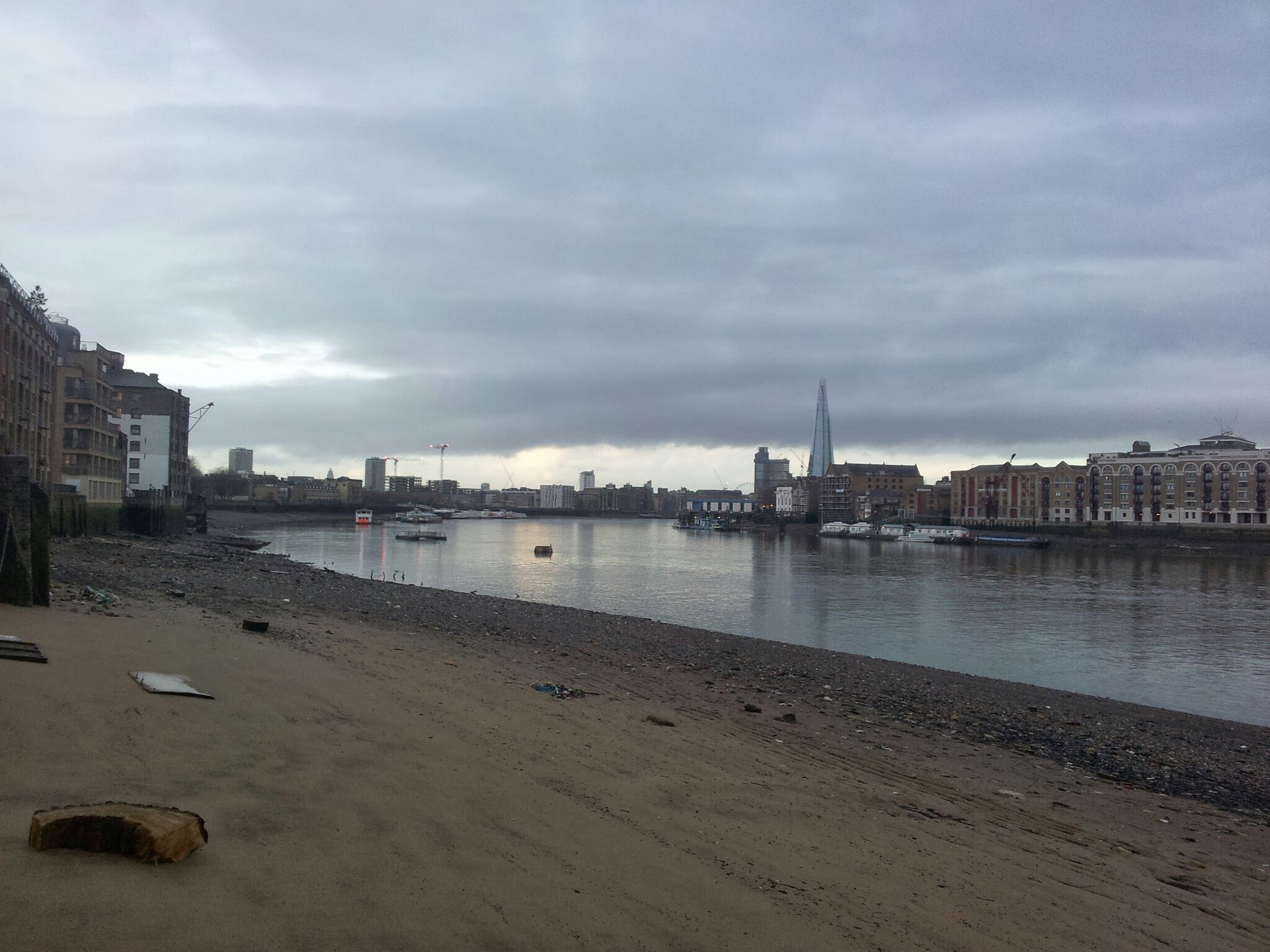
I have an affinity with the Thames that goes back a long way.
I spent a lot of my teens sailing, kayaking, mending boats and playing cards by the river at Pimlico.
The Thames is not scenery to me.
It is part of how I understand London.
So Rivers of London landed in exactly the right place.
Peter Grant moves through streets I know.
He passes places I have passed.
He inhabits a London that feels solidly, stubbornly real, while ghosts, gods, magic and history are layered over the top of it.
That combination is irresistible to me.
The tributaries and lost rivers are not just waterways.
They have voices.
Personalities.
Histories.
Relationships.
The city becomes something inhabited not only by people, but by memory.
And because the geography is familiar, the magic does not make London feel less real.
It makes it feel more so.
I still walk through Covent Garden and think:
That is where Peter met the ghost.
I genuinely do not know how many times I have listened to Kobna Holdbrook-Smith read those books to me.
Enough that his voice has become part of the landscape too.
The books now exist in my head as some combination of real London, imagined London and remembered London.
They are deeply settling in a way that is difficult to explain unless a fictional world has ever attached itself to somewhere you already love.
Just One Damned Thing After Another
In 2013, I went to Birkbeck.
I was still living in Southwark.
By then, my household had become wonderfully eclectic.
My best friend.
My daughters.
Their boyfriends.
People coming and going.
An assortment of relationships and personalities that would have seemed completely improbable to an earlier version of me.
I was running my own business.
I was editing Birkbeck’s student magazine.
I had a friend group teenage me would never have imagined I would belong to.
I had also had some therapy by then, which probably belongs in the timeline.
I was beginning to work out who I was.
Or perhaps beginning to understand that this was something I was allowed to work out.
And then I found Jodi Taylor’s Just One Damned Thing After Another.
Max is chaos.
Competent chaos, mostly.
Things go catastrophically wrong.
People die.
History is dangerous.
Authority is frequently ridiculous.
And somehow she keeps going.
There is humour in it.
There is history.
There is a deeply dysfunctional found family.
That probably explains quite a lot.
I had a dysfunctional found family of my own by then.
Not dysfunctional in the same way, fortunately.
We had fewer explosions.
But there was something in the idea of building your own people, finding your place amongst them and continuing despite everything that resonated with me.
It still does.
I still find Max empowering.
Not because she always knows what she is doing.
Quite often she very much does not.
But she keeps moving.
Sometimes that is enough.
The selves inside the books
When I look at those four books now, I do not really see a list of favourites.
I see four points in my life.
A young mother returning to work in a world whose assumptions she recognised, even when they did not fit her.
A woman newly outside the relationship that had contained almost all of her adult life.
A Londoner settling into a city she knew deeply, while enjoying the idea that magic might be running underneath the pavement.
A student, business owner and member of a strange little household beginning to understand that identity could be discovered rather than assigned.
The books have not changed.
Or rather, the words have not changed.
I have.
That means rereading is never really repetition.
The first version of me reads one book.
The next version reads another.
The story may be identical, but the conversation is not.
I think that is why some books stay with us.
Not because they are objectively the best books we have ever read.
Not because we would recommend them to everyone.
Not because they deserve five stars.
Sometimes they simply arrived at the right moment.
And when we return to them, they give us access to that moment again.
Not perfectly.
Memory is unreliable.
Context changes.
We edit our own histories without realising it.
But the book remains there, holding some version of the person who first opened it.
Perhaps that is what comfort reading can be.
Not escape.
Not softness.
Not even safety.
Recognition.
A familiar landscape.
A familiar voice.
A familiar emotional weather.
A reminder that we have inhabited other versions of ourselves before, without any one of them having to be the final answer.
Maybe that is what we return to when we want to feel held.

Join the Mailing List
If you’d like to follow along as I write, reflect, and occasionally ramble about culture, games, music, and memory, you’re very welcome to join me here.
Emails are infrequent and always written by me.