I Don’t Possess the Reference Point
I watched a video by Dawn on Sunday morning before going out.
I like Dawn’s music. I like his art. I like his vlogs, even when he is quite literally just driving around in his Volvo estate listening to music. There is something very calming, perhaps even serene, about him. That doesn’t mean he isn’t also fun, loud, quirky or occasionally completely insane.
A lot of the artists he visits and the houses and spaces he explores are very natural or connected to nature. His own digital art can be thought-provoking. He even created an avatar to take his place while he was away completing his military service.
I enjoy his music. I enjoy his DJing. I’ve never seen him perform live. And I’m not the kind of fan who needs to know everything about an artist’s private life. I’m curious about what inspires someone’s music or art, but I don’t need to know the intricacies of their life to appreciate what they create.
Which may be why one completely ordinary thing Dawn said in Sunday’s video caught me so completely off guard.
He had bought an old medium-format film camera and wanted to practise with it. So he closed his eyes, pointed randomly at a map and drove to Yeoju to take photographs.
As you do.
While driving, he talked briefly about growing up in the countryside.
“How rural was it? We didn’t even have a movie theater. We’d all watch movies together at the community hall. Sitting on the floor of the village hall, everyone in the village would gather at this shared space.”
It was barely a minute of the video.
And I was completely destabilised.
Not because I hadn’t realised that someone growing up in rural South Korea would have had a childhood very different from mine. Obviously I know that.
I grew up in London. A city of millions of people. We used to joke that Chelsea was a village, but I think we can safely say we were working with a slightly different definition of village.
It was something much more fundamental.
I didn’t possess the reference point.
I know what it is to be a child. I know what it is to watch a film. I know cinemas and community spaces and sitting on the floor with other children.
I can take all those pieces and assemble something that looks vaguely like the experience Dawn described.
But I have absolutely no idea what it felt like.
What does it mean when going to see a film means gathering in the village hall with the people you live among?
What does “everyone in the village” feel like when you’re a child?
How does growing up somewhere like that shape the way you interact with spaces and places? With community? With strangers?
I don’t know.
And then came the slightly more uncomfortable realisation.
I don’t know whether I’m even asking the right questions.
I could construct a lovely theory about how Dawn’s childhood might explain something about the adult man I was watching casually wander into a village hall, accept cold water from an elderly woman, walk into a church and start talking to complete strangers.
It might sound extremely convincing.
It might also be bollocks.
Because I’d still be interpreting his experience through mine.
That thought really bothered me.
Here’s My Ordinary. Show Me Yours.
It brought back something I’d almost forgotten from the Google+ days.
Yes. Google+. Some of us were actually there.
I was part of a small community of maybe thirty-odd people scattered across America, the UK, Spain, Ireland, Belgium and India. We had a regular Google Hangout every week, a Friday music thread, talked about our businesses and entertained each other with photographs from our everyday lives.
It was a strangely intimate little international community.
One day, our member from India said that he didn’t really feel he could share photographs of his daily life or surroundings because they were so alien to the rest of us.
That really struck me.
Because I wanted to see them.
Not photographs of “India”.
His photographs.
His street. His surroundings. Whatever was outside the window. The things he passed every day without thinking about them.
Somewhere in our little international community he’d looked at the things the rest of us were sharing and decided that his ordinary was the strange one.
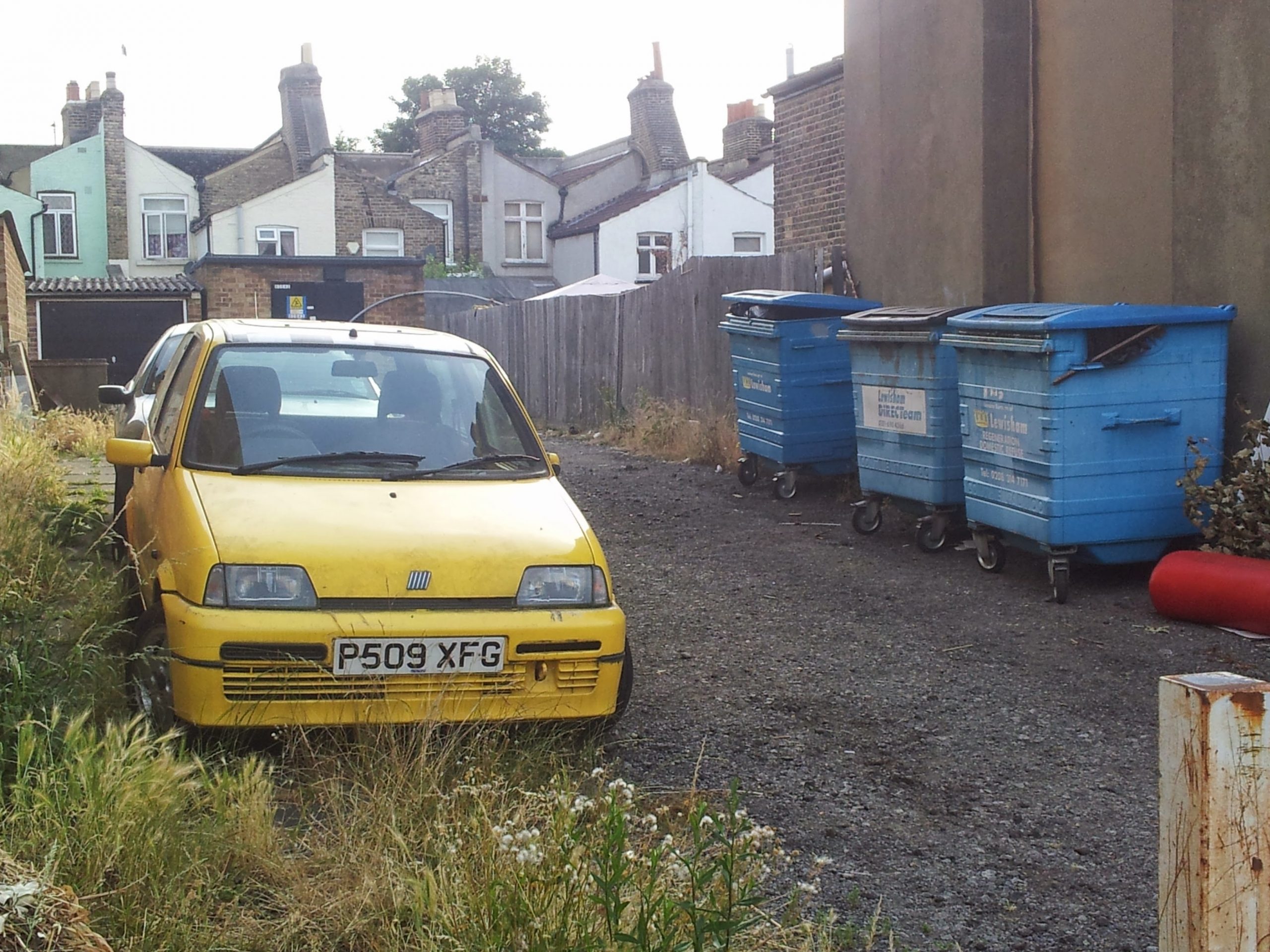
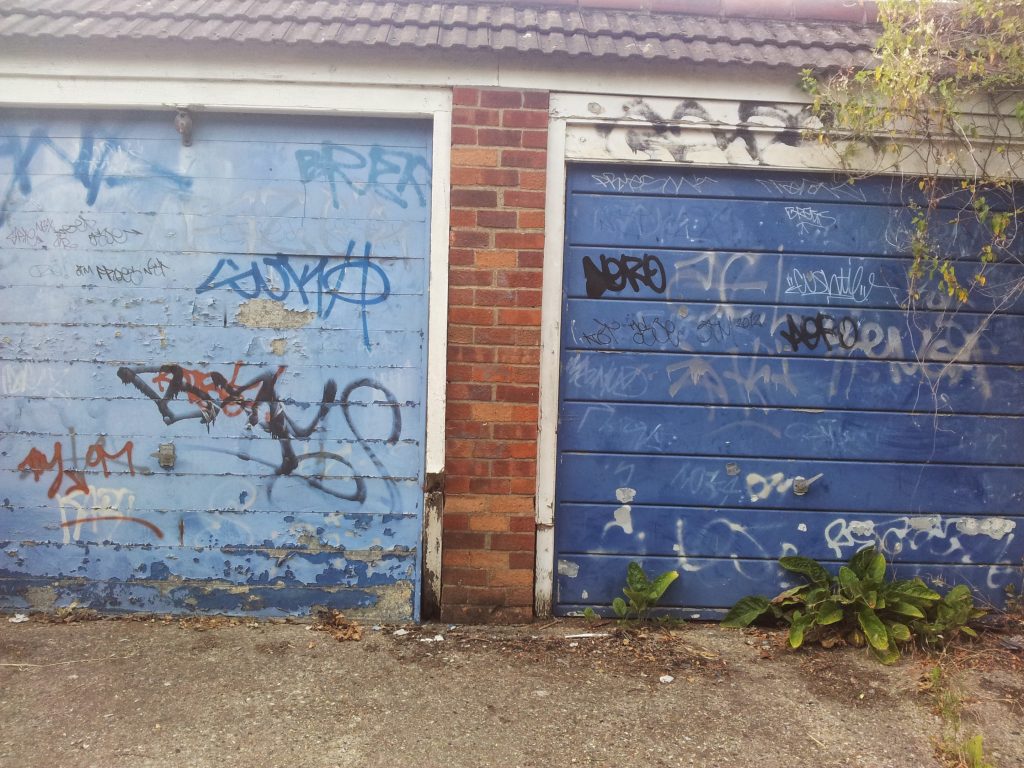
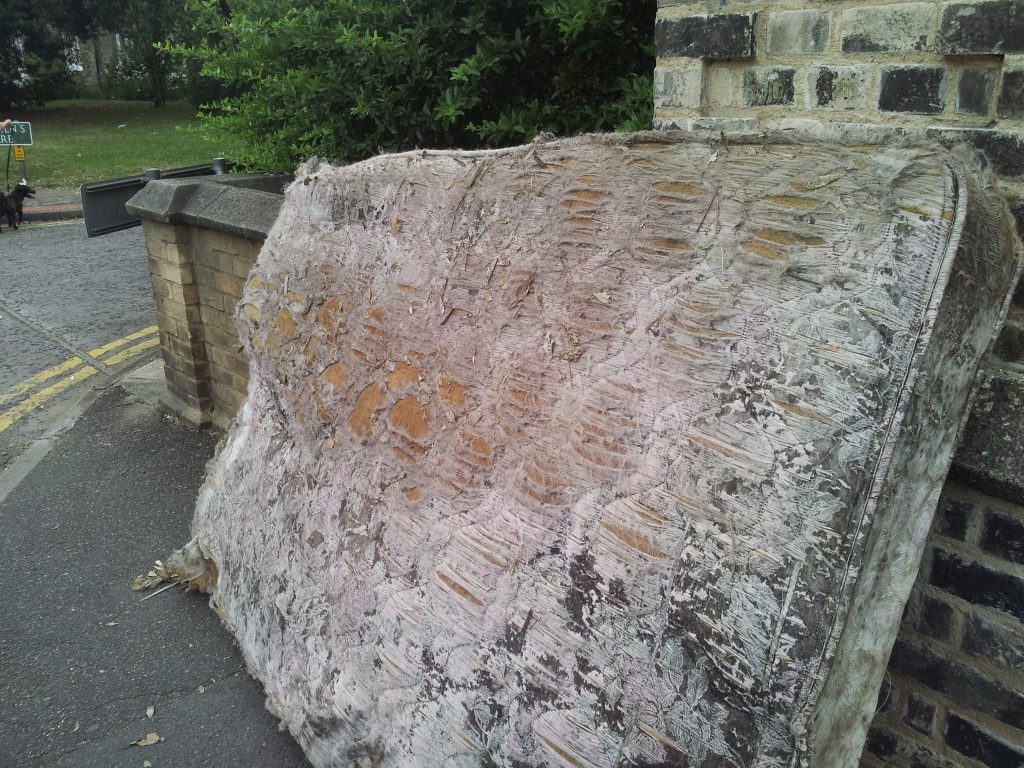
So I started taking and posting candid photographs of South London. The unremarkable bits. Graffiti-covered garages. A battered yellow car parked beside commercial bins. An abandoned mattress propped against a wall. Things I walked past that nobody would put on a postcard.
I still have some of those photographs.
Looking at them now, thirteen years later, I can remember exactly why I took them.
Not postcard London. Not Big Ben, red buses and beautifully framed skylines.
Just London as I encountered it.
I didn’t sit down and formulate some grand philosophical response. I think my instinct was simply:
Here’s my ordinary. Show me yours.
And he did.
I’d almost forgotten about that exchange until Dawn’s comment brought it back.
At the time I thought I was showing him that his surroundings weren’t somehow more alien or noteworthy than mine.
Looking back, perhaps he was showing me something too.
The South London I barely noticed because I moved through it every day wasn’t neutral.
It was just mine.
Did We Watch the Same Film?
I’ve been circling around this without realising it.
I recently wrote about The Odyssey and the wildly different reactions people had to it.
I came away asking, only half jokingly, whether we’d actually watched the same film.
Of course we had.
I thought I understood the obvious answer. We bring ourselves with us.
Our tastes. Expectations. Experiences. Cultural reference points. Memories. The things that irritate us. The things that make us cry. The things somebody else barely notices that lodge themselves in our brains for days.
Fine.
Apparently I hadn’t followed that thought nearly far enough.
Because a few hours after Dawn had thoroughly unsettled me, I went to see Toy Story 5.
I Went to See Toy Story 5. Voluntarily.
I don’t like the Toy Story franchise.
There. I said it.
I don’t like the art style. I have no nostalgic attachment to Woody or Buzz. I didn’t grow up with these films.
I’ve only ever encountered Toy Story as an adult.
In fact, the only reason I watched the originals at all is because I’m the mother of two children who did encounter Toy Story as children.
Those children are now adults.
And somewhere in the middle of Toy Story 5, with Dawn’s village hall still rattling around in my head, I realised I’d actually been sitting next to the other perspective all along.
When we watched those original films together, I was experiencing them as an adult.
My daughters were experiencing them as children.
Same sofa. Same television. Same film.
Not necessarily the same experience.
Obviously I knew we experienced the world differently. I was their mother, not another eight-year-old on the sofa.
But had I ever really thought about what that meant for something as simple as watching a film together?
What did they see that I didn’t?
What did I see that they couldn’t possibly have had the life experience to see yet?
What did Woody, Buzz or Jessie mean to them that they could never mean to me?
And now they’re adults.
They have memories of those films belonging to their childhood that I simply don’t have.
Ironically, I don’t think either of them is particularly likely to go and see Toy Story 5, so apparently nostalgia only gets you so far.
But Toy Story 5 itself started playing with perspective in a way that landed rather differently after my morning.
Jessie’s understanding of the world is very different from that of her “children”.
And there went my brain again.
What is Toy Story to a child?
I genuinely don’t know.
I bring an adult lifetime into the cinema with me.
I know about growing older. Relationships changing. People leaving. Things becoming obsolete. Attachment. Nostalgia. The strange emotional weight an entirely ordinary object can acquire simply because it accompanied you through a particular part of your life.
A child brings something else.
I can remember being a child.
I can remember how films affected me as a child.
I raised two children who watched these particular films.
But I cannot experience Toy Story as a child.
There is no childhood version of me watching Woody to return to.
My daughters have that reference point.
I don’t.
There it was again.
And This Is Where My Brain Went Slightly Sideways
I’ve always tried to walk in other people’s shoes.
When somebody behaves in a way I don’t immediately understand, my instinct is to move around the problem. What does this look like from where they’re standing? What might they know, feel or have experienced that I haven’t?
I’ve always considered that an important part of empathy.
I still do.
But now I’m wondering whether I’ve sometimes been too confident about what I’m actually doing when I attempt it.
Because I can never leave myself entirely behind.
Even when I try to imagine Dawn as a child sitting on the floor of that village hall, I’m building the scene using pieces of information and experience that belong to me.
Maybe I’m close.
Maybe I’m miles away.
And this isn’t really about the distance between London and rural South Korea.
I’d been sitting on the same sofa as my daughters while they experienced something I couldn’t.
I knew them intimately. I was raising them. I loved them.
And still, their experience belonged to them.
That’s the bit that destabilised me.
I don’t think I’ve suddenly stopped believing in empathy or in trying to see things from another person’s perspective.
Quite the opposite.
I’m just considerably less certain about where the boundary lies between understanding somebody else’s perspective and imagining what their perspective must be.
I’m not sure I’ve finished thinking about that yet.
The Photograph
The rest of Dawn’s video was beautiful.
His random trip to Yeoju eventually led him to an elderly artist, Yoo Kyung-sik, and his wife.
Their story unfolded almost accidentally.
Yoo had lost an arm in an accident while they were engaged. Everyone around his future wife opposed the marriage. She spent months thinking about what she should do and eventually decided she was going to marry him regardless.
Their life didn’t magically become easy afterwards.
Years later, Yoo became an artist.
Dawn had gone out wanting to practise photography and somehow found himself sitting in their home, looking at paintings, baby chicks and old photographs and listening to the story of their life together.
Then he discovered that they didn’t really have wedding photographs.
Their friends had taken some, apparently rather badly, and the photographs hadn’t survived.
So Dawn photographed them together.
A week later he went back.
He had printed their portrait and put it in a frame because he’d noticed that although their home contained family photographs, there wasn’t really a framed photograph that was just the two of them.
And then he gave them one more thing.
He’d created the wedding photograph they’d never had.
I was very close to tears by this point.
It was beautiful without being remotely grand. A photograph. A frame. A missing image from a life together somehow returned decades later.
And yet that wasn’t the part of the video that followed me around for the rest of the day.
It was still that little boy sitting on the floor of a village hall watching a film.
I don’t know what that felt like.
And maybe that’s the point I wasn’t expecting to arrive at.
I don’t have to turn his experience into something I recognise.
I can be curious about it.
I can listen.
I can ask questions.
I can try to understand the world around it.
But perhaps there will always be a bit in the middle that belongs entirely to him.
Or my daughters.
Or my old friend in India.
And I’m starting to wonder whether “walking in somebody else’s shoes” has ever been quite the right metaphor.
Maybe sometimes we can’t.
Maybe all we can do is show each other where we’re standing.
Which brings me all the way back to that little Google+ community and a conversation I hadn’t thought about properly in years.
Here’s my ordinary.
Show me yours.

Join the Mailing List
If you’d like to follow along as I write, reflect, and occasionally ramble about culture, games, music, and memory, you’re very welcome to join me here.
Emails are infrequent and always written by me.