Return to Moria EP1 – Second Descent: Identical Dwarves, Mushroom Economics, and a Very Large Iron Vein
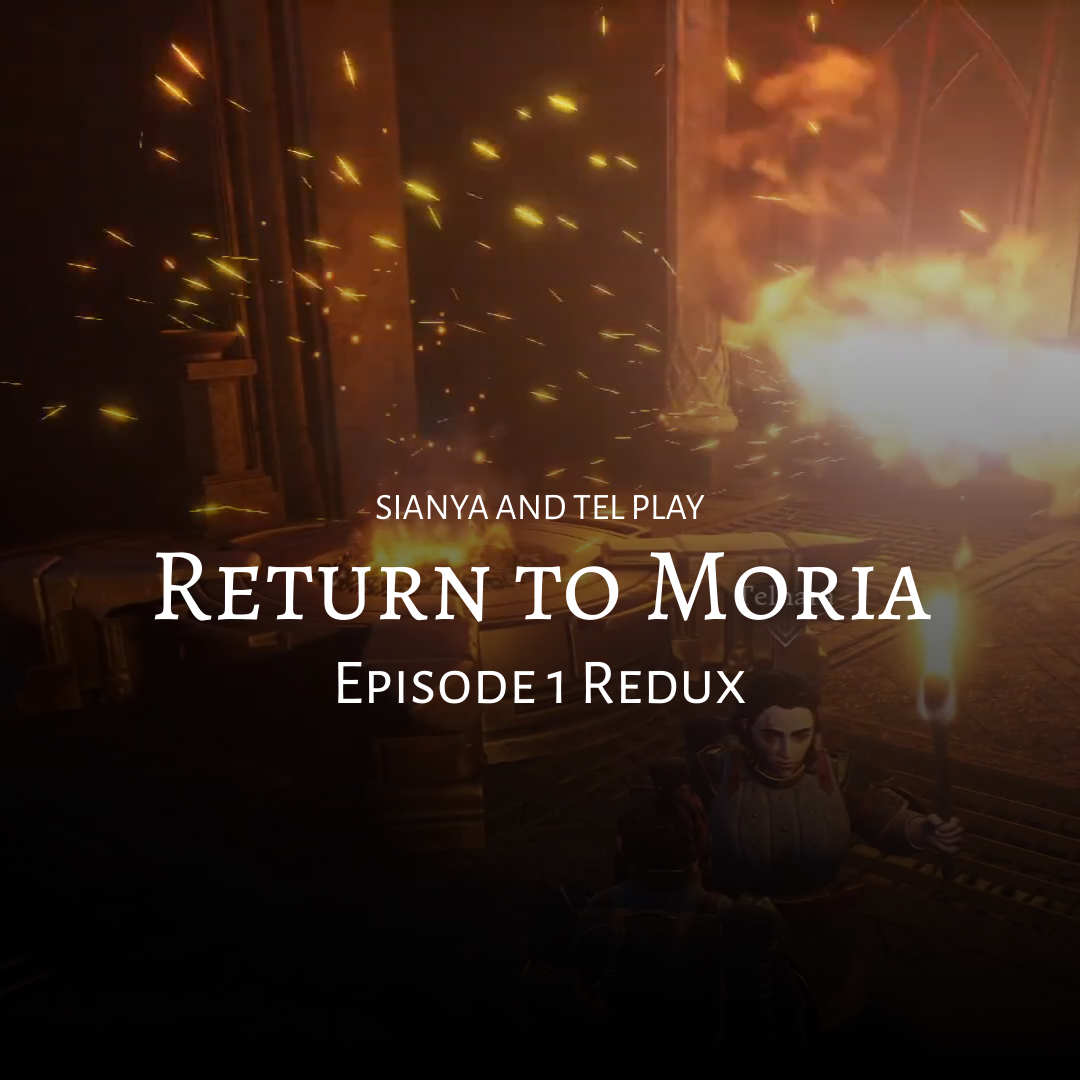
Return to Moria – Second Descent EP1 originally streamed on 3rd March 2026. We went back into the mountain with a clearer plan, an improved ore strategy, and a minor identity crisis involving dwarf voices.
The Second Descent begins with confidence.
And then very quickly becomes about administrative problems.
Specifically:
We appear to have made the same dwarf, maybe?
Tel had created a male character because she thought I was going to make a female one again.
Which was a perfectly logical decision.
Unfortunately the result was two dwarves with extremely similar voices.
This is not ideal.
The Voice Situation
We spent the opening minutes trying to work out what had happened.
Tel explained the reasoning.
“I made a guy because you were a female.
I thought the harmonies between the voices would be nice.”
Which is genuinely thoughtful.
Unfortunately we also appear to have chosen the same voice pack.
So now we sound like two slightly confused twins wandering into Moria.
Tel proposes a solution.
“Either you change your voice or I edit my character.”
She then immediately adds:
“I’m not having that faf.”
So the official plan is:
We will fix it later.
Probably.
Loot Discipline
One thing we did bring back from the first run was experience.
And by experience I mean very strong opinions about resource theft.
At one point I am politely reminded:
“Do not steal everything from underneath me again.”
This is apparently an ongoing issue.
In the early game especially, loot distribution becomes serious business.
Wood, stone, mushrooms.
Everything counts.
The Mushroom Economy
Speaking of mushrooms.
Mushrooms become an entire subplot.
They are technically emergency food.
But they are also everywhere.
So they gradually become my preferred solution to all nutritional problems.
Tel begins leaving them behind for me like small fungal care packages.
Later she warns:
“If you go for more mushrooms again, I swear to God.”
Reader.
I am carrying 21 mushrooms at this point.
This feels responsible.
Signs of the Fellowship
While exploring we begin spotting familiar details from the lore.
Little hobbit utensils.
Carvings.
Traces of those who passed through before us.
Tel explains that enemies are watching us.
“They’ll run away as soon as we go near them.
They’re literally just watching us before they start attacking later.”
Which is… comforting.
In a deeply unsettling way.
Rebuilding the Camp
Very quickly the focus shifts from wandering to infrastructure.
Stone walls.
Door.
Bedrolls.
Chests.
Ore storage.
Tel is running the operation like a dwarven project manager.
“We want stone walls to protect us from the outside world.
And a door to keep these beasties out.”
She begins organising pallets.
Iron ore goes here.
Wood over there.
Inventory space is sacred.
The Ore Strategy
This run is already different from the first attempt.
Last time we wandered more.
This time the plan is simple.
Mine.
Everything.
We discover a huge iron vein.
It just keeps going.
And going.
And going.
Eventually Tel says:
“I just dug until my pickaxe died.”
Which feels like a perfectly reasonable dwarven metric.
The Mountain Has Moved
One strange thing becomes clear as we explore.
The layout is similar to the previous run.
But not identical.
Rooms are the same shape.
Corridors are familiar.
But the resources and enemy spawns are different.
Tel explains:
“It generates slightly differently each time.”
Which means our memory of the map is helpful.
But not reliable.
Moria has quietly rearranged itself.
Side Quest: Sun Haven
At one point the conversation drifts into other games.
Tel explains Sun Haven.
Apparently it is like Stardew Valley.
Except fantasy.
“You can be an elf, an angel, a demon, a naga…
Or an animal person.”
This sounds delightful.
And extremely distracting.
We are supposed to be mining.
Resident Evil Detour
The conversation drifts again.
This time to Resident Evil.
Tel has been watching playthroughs and is extremely enthusiastic.
“The game looks amazing.”
Apparently the horror elements have escalated.
“It’s on the gorier side.”
Meanwhile we are still digging iron out of a wall.
Different genres.
Similar levels of tension.
Darkness
Eventually we push a little too far into the caves.
And it becomes very dark.
Very suddenly.
Neither of us has a torch.
Which leads to the extremely professional commentary:
“Oh my god it’s so dark.”
Tel starts lighting temporary torches to guide us back.
We make it out.
Barely.
Wolves and Goblins
The local wildlife begins to take an interest in us.
Wolves appear.
Goblins watch from the distance.
We attempt to maintain dignity while fighting them.
Which includes lines such as:
“You just leave me to battle the wolves by myself I see.”
Teamwork is thriving.
The First Proper Progress
By the end of the session we actually have something to show for ourselves.
A working camp.
Ore stockpiles.
Coal locations marked.
Weapons unlocked.
And enough iron ingots to start progressing properly.
It is, technically, a successful expedition.
Final Thoughts
The Second Descent already feels different.
We know the rhythm now.
Where to build.
What to prioritise.
When to retreat.
But the mountain is still unpredictable.
Rooms are familiar but changed.
Enemies are watching.
And somewhere out there is far more iron than we have tools to mine.
For now though, the dwarves are settled.
The forge is running.
And the mushroom supply remains strong.
Which is obviously the most important thing.

Join the Mailing List
If you’d like to follow along as I write, reflect, and occasionally ramble about culture, games, music, and memory, you’re very welcome to join me here.
Emails are infrequent and always written by me.